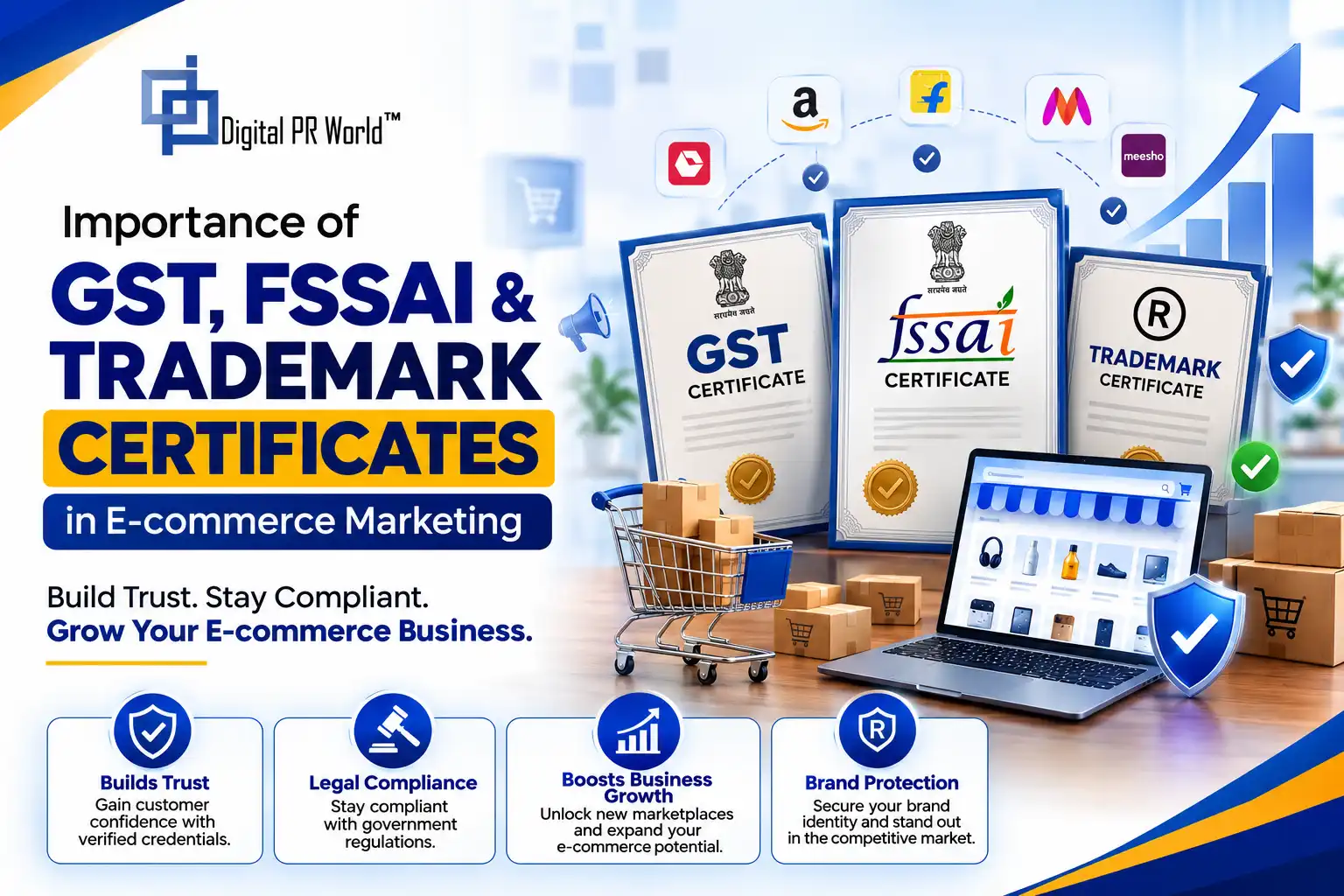
Importance of GST, FSSAI & Trademark Certificates in E-commerce Marketing
Starting an e-commerce business is more than simply listing products on platforms such as Amazon, Flipkart, and other online marketplaces. Before launching your products online, it is important to understand the basic legal and regulatory documentation required to build a reliable and sustainable e-commerce business.
As e-commerce experts, we have observed that many new sellers—and even some sellers who are already selling online—are often unclear about GST, FSSAI, and Trademark requirements. In some cases, sellers may also receive incomplete or incorrect guidance while preparing these documents.
To help sellers make informed decisions and avoid common documentation-related issues, we have created this guide covering three important areas: 1. GST, 2. FSSAI, and 3. Trademark Registration.
1. GST – Goods and Services Tax
If you are planning to start an e-commerce business, GST is one of the first important areas you need to understand.
Suppose you already operate a small offline business and want to expand it online. You may already sell products locally or occasionally promote your products through online channels. At some point, you may decide to take your business to major e-commerce marketplaces such as Amazon, Flipkart, and other platforms.
This is where sellers often start asking: What documents do I need to sell online? How do I register? What information should I provide?
GST registration is an important part of setting up your business for e-commerce operations, subject to the applicable GST rules and marketplace requirements.
What Should You Consider Before Applying for GST?
Before applying for GST registration, you should first clearly decide:
- Who will be the legal owner or partners of the business?
- What will be the legal name or trade name of the business?
- What will be the business structure?
- What address will be used as the registered/business address?
- Do the supporting documents match the information being submitted?
For example, you may decide to operate the business individually or with a partner such as your spouse, brother, sister, father, or mother. If you have selected a particular business or trade name, the relevant name should be entered correctly in the appropriate GST registration fields.
For example, if your business is operating under a name such as ABC Private Limited, the applicable legal/business details should be provided accurately according to your business structure and registration documents.
The address provided during GST registration should also be properly supported by the required address and identity documents of the relevant applicant, proprietor, partners, directors, or authorized persons, as applicable.
Important GST Registration Tips
Before submitting your GST application:
- Verify the legal name and trade name carefully.
- Ensure that the business structure is correctly selected.
- Check that the registered/business address is accurate.
- Ensure that supporting documents contain consistent information.
- Check spelling, address details, and other information before submission.
- Keep your GST documents safely available for future marketplace onboarding and business requirements.
2. FSSAI – Food Safety and Standards Authority of India
If you are planning to sell food products, grocery items, or other products covered under food safety regulations, understanding FSSAI requirements is essential.
FSSAI stands for Food Safety and Standards Authority of India. Depending on the nature and scale of your food business, the appropriate FSSAI registration or licence may be required.
Product Packaging & Labelling Requirements
For food products, sellers should also pay close attention to product packaging and labelling requirements. Depending on the product and applicable regulations, food packaging may need to include relevant information such as:
• FSSAI logo and licence/registration number
• Vegetarian or non-vegetarian symbol, where applicable
• Product and manufacturer/marketer details
• Required declarations and labelling information
• Other mandatory information prescribed under applicable food-labelling regulations.
What Should You Check Before Applying for FSSAI?
One of the most important areas sellers should carefully verify is the consistency of their business information. When applying for FSSAI, information such as the:
- Business/Entity Name
- Registered Office Address
- Address of the Authorized Premises
- Other relevant business details
should be entered accurately and supported by appropriate documents. Where applicable, these details should also remain consistent with the information provided in your GST registration and other business documents.
Why Is Accurate Information Important?
Differences in business names, addresses, or supporting documents can create complications during verification or approval. Therefore, before submitting an FSSAI application, sellers should carefully cross-check all details rather than assuming that small differences will not matter.
3. Trademark Certificate
Building a brand is one of the most important steps in establishing a long-term e-commerce business. Today, sellers on Amazon, Flipkart, and other e-commerce platforms often build their businesses around a specific brand name. Therefore, selecting and protecting the right brand name is extremely important.
A trademark can help establish legal protection for your brand and can also become an important part of your long-term brand-building strategy.
How Should You Choose a Brand Name?
When selecting a brand name, consider the following:
A good brand name should generally be:
There is no universal rule that a brand must contain a specific number of characters. However, from a branding perspective, short and memorable names are often easier for customers to recall.
Ideally, your brand name should have a clear identity or concept behind it. Before finalising a name, sellers should also check whether a similar or identical trademark already exists in the relevant class.
This is particularly important because choosing a name first and checking its trademark availability later can create unnecessary legal and business risks.
Trademark Name and Product Branding Must Be Consistent
One important point sellers should understand is the consistency between their trademark/brand name and the branding displayed on their products. For example, if your brand is ABC, you should maintain the same brand representation across your product packaging, product images, listings, and other relevant brand assets.
Avoid Unnecessary Variations
Avoid variations such as: ABC, Abc, A.B.C., or A BC when these variations are not actually intended as separate branding.
The exact presentation can be particularly important when you are building a consistent brand identity across e-commerce platforms. If you use a specific logo, the logo should also be consistently represented across your product packaging and relevant brand assets.
Brand Name vs. Tagline – They Are Not the Same
Another common misunderstanding among new sellers is the difference between a brand name and a tagline.
Brand Name
ABC
The primary identifier and legal name representing your brand identity.
Tagline
“Better Products for Everyday Life”
A marketing phrase that should not automatically be treated as part of the brand name.
Therefore, sellers should clearly identify what their actual brand name is before proceeding with trademark registration and marketplace brand-related processes.
Word Mark and Device Mark
Trademark applications can involve different forms of trademark protection. Two commonly discussed types are:
Word Mark
A Word Mark protects the textual representation of the brand name, subject to the scope and legal status of the registration.
For example: ABC
Device Mark
A Device Mark generally relates to a specific visual representation, such as a logo or stylised design containing branding elements.
For example: ABC + Logo Design
The appropriate type of trademark protection depends on the nature of the brand and the protection you are seeking. For sellers planning to build a long-term e-commerce brand, understanding the difference between word marks and device marks is important before applying.
Final Checklist for E-commerce Sellers
Before starting your e-commerce journey, make sure you have reviewed the following:
GST Checklist
- Correct business structure
- Correct legal/business information
- Accurate registered/business address
- Consistent supporting documents
- GST registration as applicable to your business
FSSAI Checklist
- Applicable FSSAI registration/licence
- Correct business information
- Accurate premises details
- Required food packaging & labelling info
- FSSAI number and logo where applicable
Trademark Checklist
- Unique and suitable brand name
- Trademark availability search
- Correct trademark class
- Consistent brand representation
- Understanding Word Mark vs. Device Mark
- Consistent use of brand name and logo