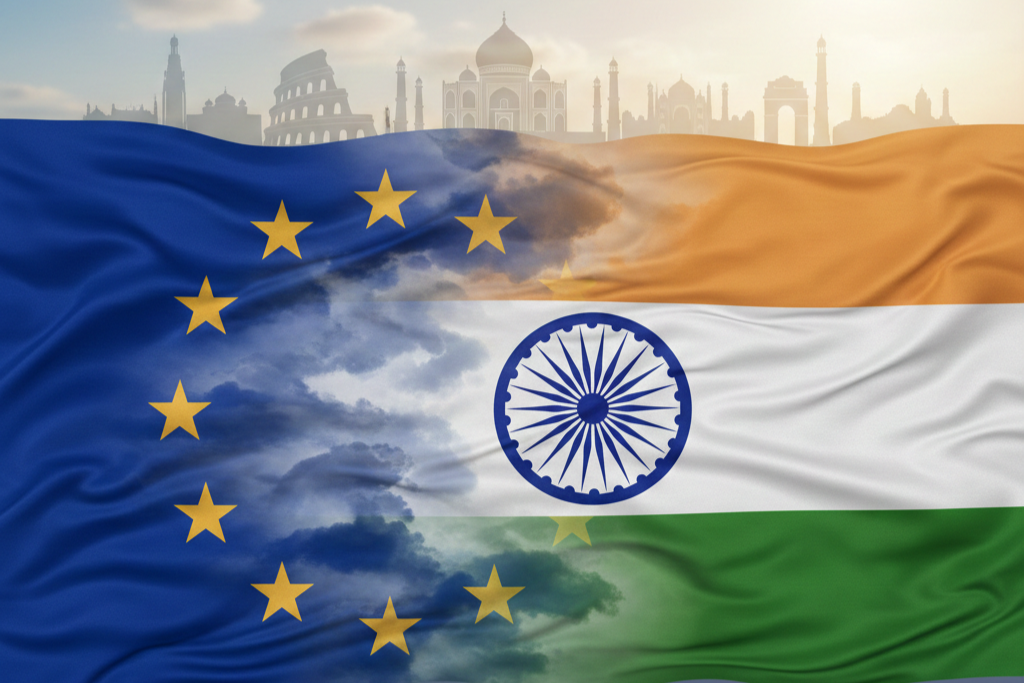
The evolving trade relationship between the European Union (EU) and India is being widely described as the “mother of all deals.” With negotiations gaining momentum for a comprehensive Free Trade Agreement (FTA), both regions are setting the stage for one of the largest economic partnerships in the world. For Indian product-based companies — from manufacturing and pharmaceuticals to textiles, engineering goods, and technology — this collaboration opens massive growth opportunities not just in exports, but also in digital visibility and lead generation.
Why the EU–India Deal Matters
The European Union is one of India’s largest trading partners, accounting for billions of euros in annual trade. The renewed FTA aims to reduce tariffs, simplify regulatory frameworks, and improve market access for goods and services on both sides. For Indian businesses, this means easier entry into a high-value consumer and industrial market spanning over 450 million people.
At the same time, European companies benefit from India’s cost-effective manufacturing, skilled workforce, and rapidly improving infrastructure. This mutual advantage creates a strong ecosystem for long-term trade growth, technology exchange, and supply chain partnerships.
India’s Competitive Advantages
India stands out globally for several reasons:
• Cost-efficient production without compromising quality
• Strong presence in pharmaceuticals, automotive parts, IT hardware, textiles, and engineering goods
• Growing compliance with international quality and safety standards
• Government-backed initiatives like Make in India and PLI schemes boosting exports
With improved trade terms, Indian product companies can scale exports faster while becoming reliable suppliers to European distributors and manufacturers.
Europe’s Strengths as a Market
Europe offers Indian exporters:
• High purchasing power and stable economies
• Strong demand for sustainable, ethical, and quality-certified products
• Advanced logistics and supply chain networks
• Clear regulatory systems that reward compliant suppliers
Once Indian companies meet EU certifications such as CE marking, ISO standards, REACH compliance, or industry-specific approvals, Europe becomes a long-term, high-margin market.
Digital Presence Will Decide Market Visibility
As European buyers increasingly search online for global suppliers, Indian product companies must become discoverable digitally. Having just a basic website is no longer enough.
To attract B2B buyers from Europe, companies should ideally have:
• A professional, fast-loading website
• A dedicated page for EU or international buyers explaining export capability
• Clear display of certifications, quality standards, and compliance documents
• Product catalogs optimized for international search queries
• Contact forms built for inquiry generation
This builds trust instantly and improves conversion when European buyers shortlist suppliers.
Organic Leads Through Search Visibility
With the EU–India trade relationship strengthening, search behavior will rise for keywords like:
• “Indian manufacturer of [product] for Europe”
• “CE certified suppliers in India”
• “bulk exporters from India to EU”
Companies that invest early in SEO can rank for these high-intent keywords and generate consistent organic B2B leads without depending solely on agents or trade fairs.
Over time, strong content, technical SEO, and international targeting can bring inbound inquiries from distributors, wholesalers, and procurement teams across Europe.
Why SEO and PPC Will Become More Relevant
While SEO builds long-term visibility, PPC advertising on Google and LinkedIn will play a major role in fast market entry. Indian exporters can directly target:
• European importers and sourcing managers
• Country-specific buyers (Germany, France, Netherlands, Italy, etc.)
• Industry-focused B2B searches
This allows businesses to test markets quickly, generate immediate leads, and scale successful campaigns.
The EU–India trade partnership truly has the potential to be the “mother of all deals” for Indian product companies. But success will not come from trade policy alone — it will depend on digital readiness.
Companies that combine export compliance with strong websites, EU-focused content, SEO strategies, and targeted PPC campaigns will dominate visibility in the European market. Those who delay may miss out on a massive wave of inbound global demand.
The future of international trade is not just at ports and expos — it’s happening on search engines.